


How to Choose the Right Conduit for Electrical Installations with Atkore Solutions
 How to Choose Electrical Conduit with Atkore Solutions
Choosing conduit is usually straightforward until the conditions change.
Knowing how to choose electrical conduit becomes important once job conditions start to change. Most installs are simple when everything stays indoors. But once you get into exposed runs, underground work, or long-term durability concerns, the wrong choice can add time, cost, or future issues.
That’s where knowing when to use each type of conduit matters.
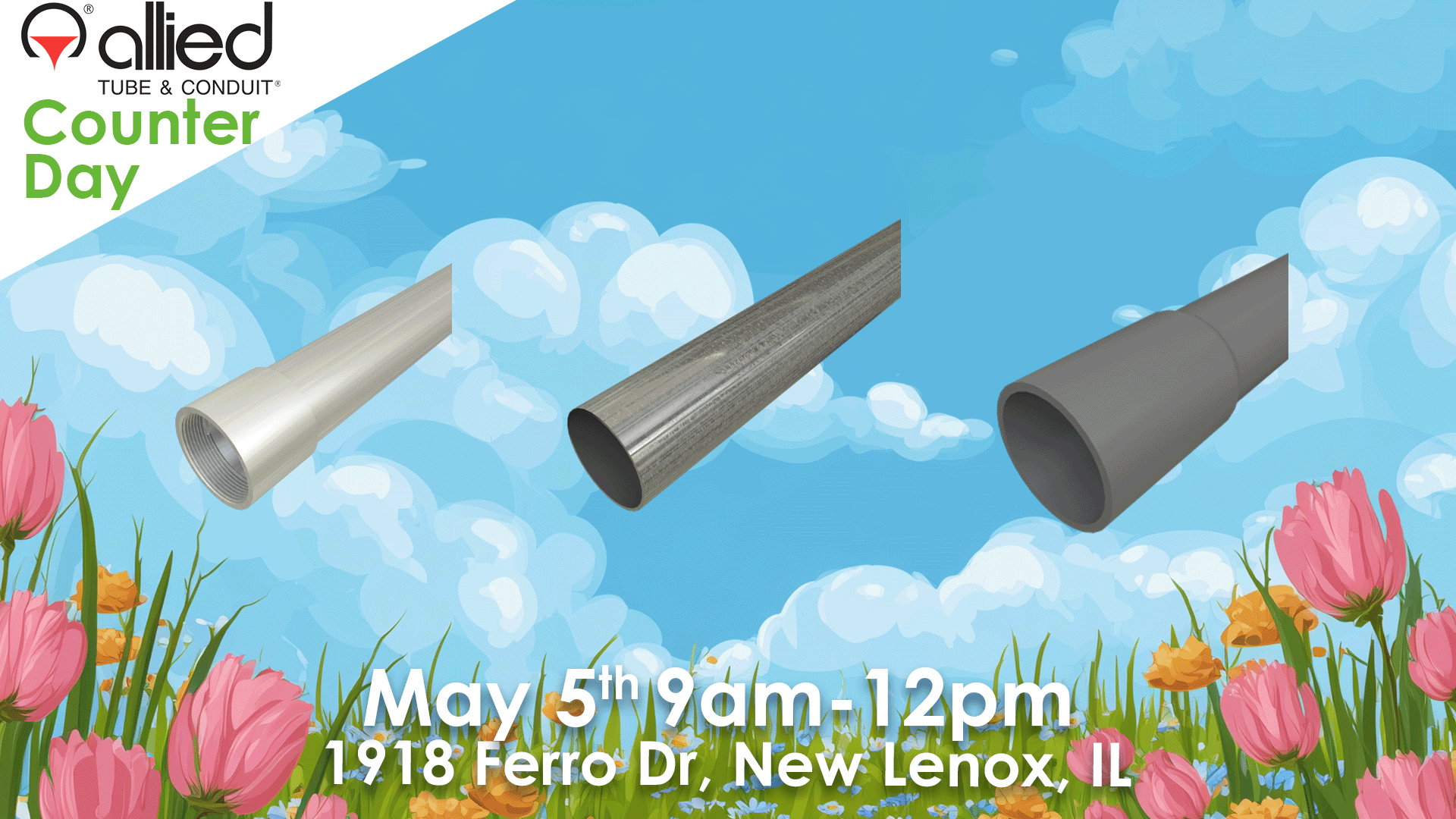
At our New Lenox Counter Day, we will be walking through a few Atkore options that come up on jobs every day and how to decide which one makes the most sense based on the conditions you are working in.
When Speed and Simplicity Matter Most
Atkore EMT (Electrical Metallic Tubing)
If the job is indoors and the goal is to move quickly, EMT conduit is usually the right call.
It is built for installs where:
- Conditions are controlled
- Corrosion is not a concern
- Efficiency matters more than heavy-duty protection
Because it does not require threading and is easier to handle, EMT helps keep installs moving, especially on larger interior jobs.
Best fit:
- Offices and commercial interiors
- Retail spaces
- Finished environments where clean runs matter
When the Environment Starts to Work Against You
Atkore Aluminum Rigid Conduit (ARC)
Once conduit is exposed, the job changes.
Weather, temperature swings, and long-term wear all come into play. That is where aluminum rigid conduit becomes a better option.
It offers:
- Strong threaded connections
- Built-in corrosion resistance
- Durability without the weight of steel
It’s the type of conduit used when the install needs to hold up over time, not just get completed.
Best fit:
- Rooftop runs
- Exterior walls
- Industrial or exposed applications
When Corrosion Is the Biggest Concern
Atkore PVC Conduit
For underground runs or environments where moisture is constant, PVC conduit is often the better choice.
Instead of protecting metal from corrosion, it avoids the issue entirely.
It is commonly used where:
- The conduit will be buried
- Water or chemicals are present
- Long-term corrosion is a concern
Lightweight and easy to install, it is built for conditions where other materials would break down over time.
Best fit:
- Underground service runs
- Slab work
- Wet or corrosive environments
A Simpler Way to Think About It
When deciding between conduit types, it usually comes down to one question:
What is this install going to be exposed to over time?
- Controlled interior means EMT
- Exposed conditions point to aluminum rigid conduit
- Underground or corrosive environments call for PVC
Getting that decision right early helps avoid problems later.
If you want to compare these options side by side and talk through real-world applications, stop by our New Lenox Counter Day and take a closer look.
For more product highlights, demos, and upcoming Counter Days, follow along:
https://instagram.com/peo__electric
https://facebook.com/ParamontEO